

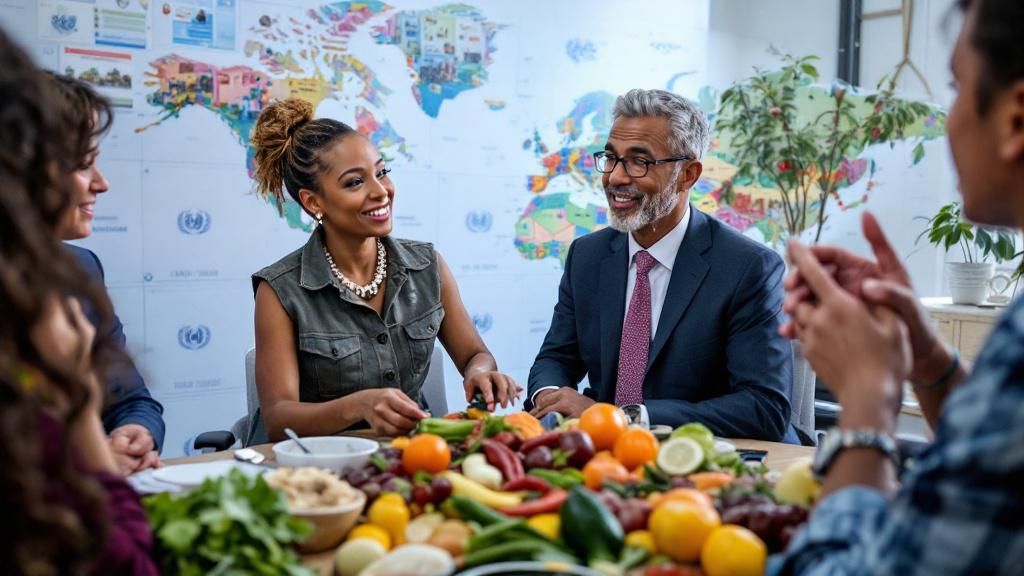
The United Nations has introduced an far-reaching initiative intended to combat the persistent global challenges of hunger and poverty that continue to afflict millions globally. This broad-based scheme marks a significant milestone in international development, combining novel approaches, significant funding pledges, and collaborative efforts from participating nations to produce enduring transformation. The initiative tackles underlying factors whilst offering urgent assistance, committed to redefining how the international society tackles these linked issues. Learn how this innovative strategy intends to reshape lives and establish greater equality.
Worldwide Action on Poverty Emergency
The United Nations’ latest initiative constitutes a watershed moment in the worldwide battle with hunger and poverty. By mobilising resources across several continents and engaging both developed and developing nations, the UN seeks to create a unified approach that goes beyond conventional limits. This joint effort acknowledges that hunger and poverty are linked problems demanding unified action. The initiative unites governments, NGOs, and commercial partners to ensure comprehensive coverage and sustainable outcomes across vulnerable regions.
Member states have made a commitment to unprecedented levels of collaborative work, committing financial support and technical expertise to bolster existing programmes. The programme stresses transparency and accountability, establishing specific measures to measure progress and impact. By utilising existing infrastructure and expanding on successful regional models, the UN seeks to improve efficiency and minimise duplication of efforts. This coordinated approach ensures that resources reach those most in need whilst building resilient systems able to managing upcoming challenges successfully.
Urgent Response Strategies
The initiative’s opening phase prioritises crisis support and rapid intervention in territories affected by acute food insecurity and extreme poverty. Urgent food provisions, healthcare support, and provisional accommodation initiatives are being distributed to vulnerable areas in the coming weeks. The UN has created quick-action units furnished with resources to assess ground-level circumstances and tailor interventions accordingly. These critical steps aim to protect populations whilst sustained strategies are being implemented, guaranteeing exposed groups get essential aid without delay.
Financial disbursement mechanisms have been simplified to speed up aid distribution to front-line bodies working within affected areas. Local partners and community representatives are being enabled to identify priority needs and channel resources efficiently. Training initiatives for distribution staff ensure that assistance gets to intended beneficiaries whilst upholding cultural respect and dignity. These swift measures serve as a bridge between crisis response and lasting progress, offering breathing space for communities to stabilize and begin recovery processes.
Long-Term Strategic Goals
The strategy sets out far-reaching objectives for reducing poverty and enhancing food security over the following ten years. Targeted funding in agricultural infrastructure, education, and healthcare systems aim to tackle root causes of poverty rather than simply addressing symptoms. The UN has undertaken to assist family farmers through technology transfer and market access programmes, allowing them to increase productivity in an environmentally responsible manner. These foundational investments create pathways for societies to achieve self-sufficiency and financial autonomy whilst safeguarding environmental resources.
Long-term success necessitates institutional strengthening and capacity building within national governments and community-based entities. The initiative emphasises workforce training, governance improvements, and broader economic expansion to create robust economic systems capable of withstand emerging crises. By fostering entrepreneurship and advancing equitable development, the programme aims to generate lasting job prospects. These targeted allocations represent a fundamental shift towards empowering communities to shape their future direction, ensuring lasting transformation outside the programme’s scheduled duration.
Implementation and Partnership Framework
The UN’s initiative functions via a multi-layered operational approach that involves governments, non-governmental organisations, and commercial stakeholders. By creating regional hubs throughout Africa, Asia, and Latin America, the programme delivers culturally appropriate interventions that address regional needs. This decentralised approach facilitates rapid response capacity whilst maintaining supervision from UN headquarters. Working alongside global development organisations provide crucial financial mechanisms, allowing sustainable infrastructure programmes that provide work opportunities and enhance food security structures across disadvantaged communities.
Success relies essentially on authentic partnership between industrialised and emerging nations, with open oversight mechanisms guaranteeing resources arrive at intended beneficiaries. The framework encompasses capability enhancement schemes that strengthen local institutions and empower communities to become independent. Ongoing oversight through independent audits and community feedback mechanisms upholds programme quality and effectiveness. By cultivating sustained relationships rather than temporary aid arrangements, the UN initiative seeks to create structural transformation that disrupts cycles of hardship and malnutrition, ultimately developing resilient societies capable of sustainable development.
